

Gaya Hidup Sehat
How to Calculate BMI: Formula, Examples & Results Explained

Written By
Admin • 18 November 2026
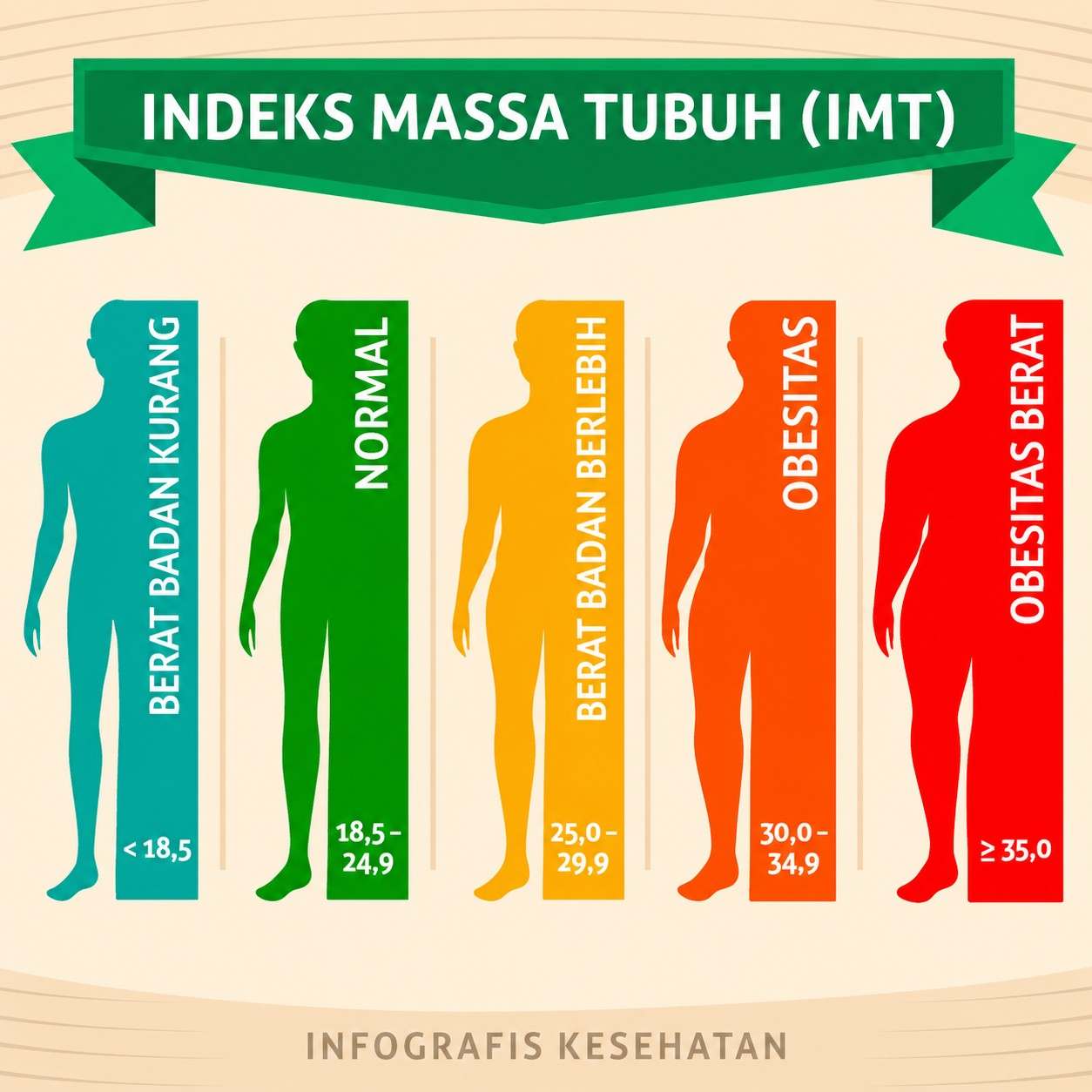
Calculating BMI is simple: divide your weight in kilograms by the square of your height in meters. The result helps determine whether your weight falls within the underweight, normal, overweight, or obesity category.
BMI does not directly measure body fat, but it serves as a practical initial screening tool for assessing potential weight-related health risks.
In Indonesia, BMI is known as Indeks Massa Tubuh (IMT), or Body Mass Index.
This guide explains the BMI formula, provides practical calculation examples, outlines BMI categories based on the Asia-Pacific classification used by Indonesia's Ministry of Health, and discusses important limitations when interpreting BMI results.
What Is BMI or Body Mass Index?
BMI (Body Mass Index) is a measurement that compares an individual's weight with their height to estimate weight status in adults.
It is a simple, inexpensive, and convenient screening method that can be calculated at home using a weighing scale and a height-measuring device.
The United States Centers for Disease Control and Prevention (CDC) emphasizes that BMI is a screening tool, not a diagnostic test.
This means that BMI can help identify potential weight-related health concerns, but a comprehensive health assessment requires additional measurements and medical evaluation.
BMI Formula and How to Calculate It
The BMI formula used by Indonesia's Ministry of Health and the World Health Organization (WHO) is:
BMI = Weight (kg) ÷ [Height (m) × Height (m)]
Alternatively:
BMI = Weight (kg) ÷ Height² (m²)
Steps to Calculate BMI
-
Measure your weight. Ideally, weigh yourself in the morning before eating and while wearing light clothing.
-
Measure your height. Stand without shoes and convert your height from centimeters to meters. For example, 160 cm equals 1.6 m.
-
Square your height. Multiply your height in meters by itself.
-
Calculate your BMI. Divide your weight by your squared height.
-
Interpret the result. Round your BMI to one decimal place and compare it with the appropriate BMI classification table.
BMI Calculation Examples
Example 1:
A person weighs 65 kg and is 160 cm tall.
-
Height in meters: 1.6 m
-
Squared height: 1.6 × 1.6 = 2.56
-
BMI: 65 ÷ 2.56 = 25.4
Example 2:
A person weighs 55 kg and is 165 cm tall.
-
Height in meters: 1.65 m
-
Squared height: 1.65 × 1.65 = 2.7225
-
BMI: 55 ÷ 2.7225 = 20.2
How to Calculate a Healthy Weight Range Using BMI
The BMI formula can also be rearranged to estimate a healthy weight range based on height.
To calculate the range:
-
Multiply your squared height by 18.5 to estimate the lower boundary.
-
Multiply your squared height by 22.9 to estimate the upper boundary.
For example, if your height is 160 cm (1.6 m), the normal weight range according to the Asia-Pacific BMI classification is approximately 47.4–58.6 kg.
Keep in mind that this calculation provides a general reference rather than an individualized ideal weight.
BMI Categories for Adults
Once you have calculated your BMI, compare the result with the appropriate classification.
Indonesia's Ministry of Health uses the Asia-Pacific BMI classification in its 2025 National Clinical Practice Guidelines (Pedoman Nasional Pelayanan Klinis or PNPK) for Adult Obesity Management.
| Classification | BMI (kg/m²) | Risk of Associated Health Conditions |
|---|---|---|
| Underweight | Below 18.5 | Lower obesity-related risk, but possible other health concerns |
| Normal Weight | 18.5–22.9 | Average |
| Overweight | 23.0–24.9 | Increased |
| Obesity Class I | 25.0–29.9 | Moderate |
| Obesity Class II | 30.0 or higher | High |
Using this classification:
-
Example 1: A BMI of 25.4 falls into the Obesity Class I category.
-
Example 2: A BMI of 20.2 falls into the normal weight category.
The Asia-Pacific BMI thresholds are lower than the global WHO classification, which generally defines overweight as a BMI of 25 or higher and obesity as a BMI of 30 or higher.
In Asian populations, the risk of diabetes and cardiovascular disease may increase at lower BMI levels.
Therefore, the Asia-Pacific classification is often considered more appropriate when evaluating weight-related health risks among Indonesian adults.
How to Calculate BMI in Children and Teenagers
The BMI formula for children is the same as the formula used for adults.
However, children's BMI results must not be interpreted using adult BMI categories.
This is because body composition changes with age and differs between boys and girls during growth and development.
For children aged 5–18 years, Indonesia's Ministry of Health uses BMI-for-age (IMT/U) based on child growth standards.
The results are expressed using Z-scores.
The classification includes:
-
Normal: Between −2 SD and +1 SD.
-
Overweight: Above +1 SD up to +2 SD.
-
Obesity: Above +2 SD.
For children younger than five years, nutritional status is assessed using other age-appropriate growth indicators and charts.
Because children's BMI interpretation requires growth charts and age-specific references, assessment should ideally be performed by a pediatrician or qualified healthcare professional during routine growth monitoring.
Limitations of BMI You Should Know
Although BMI is useful for screening, it cannot distinguish between muscle, fat, bone, and body fluids.
As a result, BMI may be less accurate for certain groups.
1. Athletes and Highly Muscular Individuals
Athletes and people with greater muscle mass may have a high BMI even when their body fat percentage is relatively low.
In these cases, body composition measurements may provide additional useful information.
2. Older Adults
In older adults, particularly those over 65 years of age, the relationship between BMI and health outcomes may differ from that of younger adults.
Muscle mass also tends to decrease with age, meaning BMI alone may not accurately reflect nutritional or functional status.
3. Differences Between Men and Women
Women generally have a higher body fat percentage than men at the same BMI.
Therefore, BMI results should be interpreted alongside other health measurements when appropriate.
4. Pregnant Women
Weight gain during pregnancy cannot be evaluated using standard adult BMI categories.
Instead, pre-pregnancy BMI is commonly used to help determine recommended weight gain during pregnancy.
BMI also does not indicate where body fat is stored.
This is important because excess abdominal fat is more strongly associated with conditions such as diabetes, hypertension, and cardiovascular disease.
Combine BMI with Waist Circumference Measurements
Waist circumference is another useful measurement for assessing abdominal fat and cardiometabolic health risks.
To measure your waist circumference:
-
Wear light clothing or measure directly over the skin.
-
Stand upright and relax your abdomen.
-
Place a measuring tape horizontally around your waist, halfway between the lowest rib and the top of the hip bone.
-
Take the measurement after breathing out normally.
According to the Asia-Pacific consensus referenced in Indonesia's Adult Obesity Management guidelines, central obesity is identified using the following waist circumference thresholds:
-
Men: More than 90 cm.
-
Women: More than 80 cm.
Even individuals with a normal BMI may have increased health risks if they carry excess abdominal fat.
Conversely, someone with a slightly elevated BMI, a healthy waist circumference, and substantial muscle mass may not necessarily have excess body fat.
For this reason, BMI should be interpreted alongside waist circumference and other relevant health indicators.
What Should You Do After Calculating Your BMI?
If Your BMI Is Below Normal
Being underweight may be associated with insufficient nutritional intake, problems absorbing nutrients, or certain medical conditions.
Gradually increase your intake of balanced, nutritious foods to support healthy weight gain.
Consult a healthcare professional if you experience unexplained weight loss or difficulty maintaining a healthy weight.
If Your BMI Is Normal
Maintain a balanced diet, regular physical activity, and adequate sleep.
Monitor your body weight and waist circumference periodically, such as every few months, to identify significant changes.
If Your BMI Is Above Normal
Start with small, sustainable lifestyle changes.
These may include:
-
Reducing sugary drinks.
-
Eating more vegetables and fruits.
-
Choosing appropriate food portions.
-
Increasing daily physical activity.
-
Maintaining consistent sleep habits.
Gradual weight loss is generally safer and easier to maintain than extreme dieting.
If an elevated BMI is accompanied by high blood pressure, diabetes, or high cholesterol, consult a physician for an individualized weight management plan.
Frequently Asked Questions About BMI Calculation
1. What Is a Normal BMI for Indonesians?
According to the Asia-Pacific classification used by Indonesia's Ministry of Health, the normal BMI range for adults is 18.5–22.9.
The other categories are:
-
Overweight: 23.0–24.9.
-
Obesity Class I: 25.0–29.9.
-
Obesity Class II: 30.0 or higher.
2. Is BMI Calculated Differently for Men and Women?
No. The BMI formula and adult classification thresholds are the same for men and women.
However, women generally have a higher body fat percentage than men at the same BMI.
Therefore, waist circumference and other body composition measurements may provide additional information.
3. Can BMI Be Used During Pregnancy?
Pre-pregnancy BMI is useful for determining recommended weight gain during pregnancy.
However, BMI calculated during pregnancy should not be interpreted using standard adult weight categories.
Consult an obstetrician to determine an appropriate weight gain target based on your pre-pregnancy BMI and individual medical condition.
4. How Often Should BMI Be Checked?
There is no universal rule for how frequently BMI should be measured.
For general health monitoring, checking your weight, BMI, and waist circumference every few months may be sufficient.
More frequent monitoring may be appropriate if you are following a medically supervised weight management program.
5. Does Having a Normal BMI Mean You Are Definitely Healthy?
Not necessarily.
BMI only reflects the relationship between body weight and height.
Overall health is also influenced by factors such as:
-
Waist circumference.
-
Blood pressure.
-
Blood sugar levels.
-
Cholesterol levels.
-
Smoking habits.
-
Physical activity.
-
Other medical conditions.
Therefore, a normal BMI does not automatically guarantee good health.
When Should You Consult a Doctor?
Consider consulting a healthcare professional if:
-
Your BMI is below 18.5 or you experience significant unexplained weight loss.
-
Your BMI is 25 or higher, or your waist circumference exceeds the recommended thresholds for central obesity.
-
Your BMI is above normal and you also have high blood pressure, diabetes, high cholesterol, severe snoring, or joint pain.
-
You have tried to lose or gain weight but have not achieved your goals.
-
You are concerned about your child's growth or weight development.
At Tzu Chi Hospital, you can find a doctor specializing in clinical nutrition or internal medicine to help interpret your BMI results and develop a suitable weight management plan.
For children, a pediatrician can provide appropriate growth and nutritional assessments.
You can also schedule a consultation through Tzu Chi Hospital WhatsApp or contact our Call Center at 021 5095 0888.
Medically reviewed by Dr. Dian Araminta Ramadhania, M.Gizi, Sp.GK.
Related Articles
Topic