

Kesehatan Gigi dan Mulut
12 Ways to Treat Cavities: Symptoms & Treatment Options

Written By
Admin TzuChi • 25 November 2026
Many people only start looking for ways to treat cavities when their toothache becomes unbearable.
What may initially feel like mild sensitivity when eating sweet foods or drinking cold beverages can gradually develop into frequent pain that interferes with work and even makes it difficult to sleep at night.
Delaying dental visits and maintaining poor oral hygiene can allow tooth decay to worsen without noticeable warning signs.
Before the condition becomes more serious, learn about safe and effective ways to treat cavities through this comprehensive guide.
Symptoms of Cavities
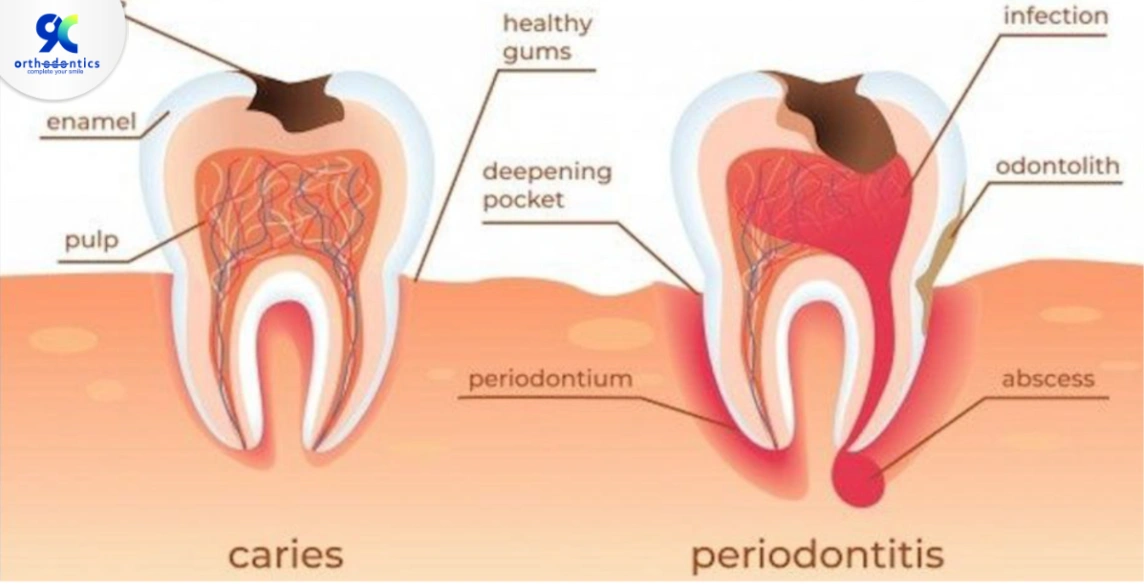
Comparison Between Tooth Decay (Dental Caries) and Periodontitis (Infection of the Tooth-Supporting Tissues) | Source: 9C Orthodontics
Before exploring how to treat cavities, it is important to recognize the symptoms of tooth decay, which vary depending on the severity of the condition.
When decay reaches the dental pulp, which contains the tooth's nerves and blood vessels, patients may experience intense, throbbing, or persistent pain.
Common symptoms of cavities include:
-
Pain when consuming sweet, hot, or cold foods and beverages.
-
Persistent or throbbing toothaches.
-
Tooth sensitivity.
-
Visible holes or pits in the teeth.
-
Brown, black, or white spots on the tooth surface.
-
Pain when biting or chewing.
-
Persistent bad breath.
Causes of Cavities
Cavities develop when tooth structure is gradually damaged by dental caries, a process influenced by several factors.
Some common causes of cavities include:
-
Plaque and Bacterial Buildup: Oral bacteria produce acids when they break down sugars from food.
-
Enamel Erosion: Repeated acid exposure causes tooth enamel to lose minerals, eventually leading to cavities.
-
High Sugar and Carbohydrate Consumption: Frequent consumption of sugary foods and fermentable carbohydrates increases the risk of tooth decay.
-
Poor Oral Hygiene: Inadequate brushing and flossing allow plaque to accumulate on tooth surfaces.
-
Insufficient Fluoride Exposure: Inadequate fluoride protection can make enamel more vulnerable to decay.
-
Dry Mouth (Xerostomia): Reduced saliva production decreases the mouth's natural protection against acids and bacteria.
12 Ways to Treat Cavities
Illustration of Tooth Layers and Dental Caries
There are several ways to treat cavities and relieve the pain associated with tooth decay.
Some require professional dental treatment, while others can provide temporary relief at home.
However, professional dental treatment is essential for managing established cavities, as home remedies cannot restore tooth structure that has already been lost.
Here are 12 treatment and management options.
1. Dental Fillings
One of the most common treatments for cavities is a dental filling.
During this procedure, the dentist removes the decayed portion of the tooth and fills the damaged area with an appropriate restorative material.
Dental fillings help restore the tooth's structure and function while preventing further damage when combined with proper oral hygiene.
2. Root Canal Treatment
If tooth decay progresses deeply and affects the dental pulp, the dentist may recommend root canal treatment.
This procedure is generally performed when the pulp becomes irreversibly inflamed or infected.
During root canal treatment, the dentist removes the affected pulp tissue, cleans and disinfects the root canal system, and seals the canals to preserve the tooth.
Root canal treatment can help save a severely damaged tooth that might otherwise require extraction.
3. Dental Crowns
After root canal treatment, or when a tooth has lost a significant amount of its structure, a dental crown may be recommended.
A dental crown covers and protects the remaining tooth structure.
Its purpose is to restore function, improve durability, and reduce the risk of fractures or further damage.
4. Professional Fluoride Treatment
For very early-stage tooth decay that has not yet formed a physical cavity, dentists may recommend professional fluoride treatments.
High-concentration fluoride applications help strengthen tooth enamel and promote remineralization.
This treatment may help stop or reverse early enamel demineralization.
However, fluoride cannot repair a cavity once a hole has developed in the tooth.
5. Warm Saltwater Rinse
Rinsing your mouth with warm saltwater may provide temporary relief from dental discomfort.
Saltwater can help rinse away food particles and maintain oral cleanliness.
However, this method does not eliminate tooth decay or treat an underlying dental infection.
It should only be used as a temporary supportive measure until professional treatment is available.
6. Cold Compress
Applying a cold compress to the outside of the cheek may help reduce swelling and temporarily relieve discomfort.
Cold temperatures can reduce local inflammation and provide a mild numbing effect.
This method may be helpful when tooth pain is accompanied by swelling or after certain dental procedures.
Although a cold compress may provide quick relief, it does not treat the underlying cause of a toothache.
7. Avoid Foods That Trigger Pain
When experiencing tooth sensitivity or pain, avoid foods and beverages that worsen symptoms.
Common triggers include:
-
Sugary foods and drinks.
-
Very cold beverages.
-
Hot foods and drinks.
-
Acidic foods.
Limiting these triggers may help reduce discomfort while waiting for dental treatment.
8. Brush Your Teeth Properly and Regularly
Having cavities is not a reason to stop brushing your teeth.
Even when a tooth is sensitive or painful, maintaining good oral hygiene remains essential.
Brush your teeth twice daily using a soft-bristled toothbrush and fluoride toothpaste.
Gentle, effective brushing helps remove plaque and food particles that can contribute to further decay.
9. Use Antiseptic Mouthwash
Antiseptic mouthwash may help reduce certain oral bacteria and support overall oral hygiene.
However, mouthwash should not replace regular brushing, flossing, or professional dental care.
Choose a mouthwash appropriate for your oral health needs and follow your dentist's recommendations.
10. Dental Sealants
Dental sealants are thin protective coatings applied to the chewing surfaces of teeth, particularly molars.
They help prevent food particles and bacteria from accumulating in deep grooves.
Dental sealants are commonly recommended for children and adolescents as a preventive measure.
In selected cases, sealants may also help manage early non-cavitated lesions.
However, sealants are not a substitute for dental fillings when significant tooth structure has already been lost.
11. Tooth Extraction
When a tooth is severely damaged and cannot be restored through fillings, crowns, or root canal treatment, extraction may become necessary.
Tooth extraction is usually considered when the damage is extensive, the infection cannot be adequately managed, or insufficient healthy tooth structure remains.
The dentist will evaluate whether the tooth can be preserved before recommending extraction.
12. Dental Bridges or Implants
If a severely damaged tooth must be extracted, replacing the missing tooth may be recommended.
Common replacement options include:
-
Dental Bridges: Fixed restorations supported by neighboring teeth or implants.
-
Dental Implants: Artificial tooth roots surgically placed into the jawbone to support replacement teeth.
Replacing missing teeth may help restore chewing function, maintain proper tooth alignment, and improve oral function.
The most appropriate option depends on the patient's oral health, bone condition, and treatment needs.
Related Article: Tips for Maintaining Oral and Dental Health During Fasting
Understanding the Structure of a Tooth
Tooth Structure | Source: MouthHealthy
Human teeth consist of several layers that work together to protect the sensitive tissues inside.
Understanding these structures helps explain how cavities develop and why certain treatments may be necessary.
1. Enamel
Enamel is the hard outer protective layer of the tooth crown.
It acts as a barrier against chewing forces, bacteria, and substances that may cause damage.
Key characteristics of enamel include:
-
It forms the outermost layer of the tooth crown.
-
It is the hardest tissue in the human body.
-
It consists primarily of minerals, particularly hydroxyapatite.
-
It protects the underlying tooth structures against damage and wear.
2. Dentin
Dentin is located beneath the enamel and is more vulnerable to damage.
It contains microscopic tubules that can transmit external stimuli toward the dental pulp.
Key characteristics include:
-
It is located directly beneath the enamel.
-
It is softer than enamel because of its higher organic content.
-
It contains microscopic tubules associated with tooth sensitivity.
-
It is formed and maintained by specialized cells called odontoblasts.
3. Dental Pulp
The dental pulp is the innermost living tissue of the tooth.
It contains nerves, blood vessels, and connective tissue.
The main characteristics of dental pulp include:
-
It is located within the center of the tooth.
-
It contains nerves, blood vessels, and connective tissue.
-
It provides nutritional support and sensory function.
-
It contributes to dentin formation when necessary.
When tooth decay reaches the pulp, it may cause severe inflammation, pain, or infection if left untreated.
When Does a Cavity Require Root Canal Treatment?
Tooth decay usually progresses from the outer enamel toward the deeper layers of the tooth.
The need for root canal treatment depends on the extent of the damage and the condition of the dental pulp.
1. Cavities Limited to the Enamel
When tooth decay is limited to the enamel, treatment is generally simpler.
Important points include:
-
Early non-cavitated lesions may be managed with remineralization treatments.
-
Cavities that have already formed may require dental fillings.
-
Enamel does not contain nerves, so early decay may cause little or no pain.
-
Early treatment can help prevent further progression.
2. Cavities That Reach the Dentin
When tooth decay extends into the dentin, patients are more likely to experience sensitivity or discomfort.
This occurs because dentin contains microscopic tubules that transmit stimuli toward the pulp.
Important considerations include:
-
Sensitivity and pain may become more noticeable.
-
Root canal treatment is not always necessary if the pulp remains healthy.
-
The dentist may remove the decayed tissue and restore the tooth with a filling.
-
In selected cases involving pulp exposure, vital pulp therapy, including direct pulp capping, may be considered.
3. Cavities That Reach the Dental Pulp
When decay extends into the pulp and causes irreversible inflammation or infection, root canal treatment may be required to save the tooth.
The procedure generally involves:
-
Removing the infected or irreversibly inflamed pulp tissue.
-
Cleaning and disinfecting the root canal system.
-
Filling and sealing the root canals.
-
Restoring the tooth to protect it and restore its function.
Possible signs of significant pulp involvement include:
-
Severe or persistent toothache.
-
Lingering sensitivity to hot or cold temperatures.
-
Swelling around the affected tooth.
-
Infection near the tooth root.
A dentist must perform an examination to determine whether root canal treatment is necessary.
How to Relieve Cavity Pain at Home
If you develop a sudden toothache and cannot immediately visit a dentist, certain home care measures may provide temporary relief.
These methods focus on reducing discomfort and managing symptoms until professional treatment is available.
Warm Saltwater Rinse
Rinse your mouth gently with warm saltwater.
A common preparation involves dissolving approximately half a teaspoon of salt in a glass of warm water.
This may help remove food particles and provide temporary relief from irritation.
Avoid swallowing the solution.
Cold Compress
Apply a cold compress wrapped in a clean cloth to the outside of the cheek for approximately 10–15 minutes at a time.
This may help reduce swelling and relieve discomfort.
Avoid applying ice directly to the skin.
Some traditional home remedies suggest massaging the area between the thumb and index finger with ice. However, evidence supporting this method for toothache relief is limited, and it should not replace appropriate dental care.
Medications Commonly Used for Cavity-Related Toothache
Medications may provide temporary relief from severe tooth pain, particularly when cavities cause persistent or throbbing discomfort.
However, pain medication cannot repair tooth decay or eliminate the source of an infection.
Professional dental treatment is still necessary.
Always consult a healthcare professional before taking medication, especially if you have allergies, underlying medical conditions, or are taking other medicines.
The following medications are mentioned in the source article.
1. Cataflam 50 mg (Diclofenac Potassium)
Image: Cataflam 50 mg | Source: K24
Cataflam contains diclofenac potassium, which belongs to a class of medicines called nonsteroidal anti-inflammatory drugs (NSAIDs).
It is used to reduce inflammation and relieve pain.
In certain situations, a physician may prescribe diclofenac for dental pain or discomfort following dental procedures.
Important precautions:
-
Use only as directed by a healthcare professional.
-
It may increase the risk of gastrointestinal bleeding, kidney problems, and cardiovascular complications.
-
It may not be suitable for patients with certain medical conditions or those taking specific medications.
-
Taking it with food may reduce stomach discomfort but does not eliminate its risks.
2. Neuralgin Rx
Image: Neuralgin Rx | Source: K24
Neuralgin Rx is described in the source article as a combination medication containing metamizole and vitamins B1, B6, and B12.
Metamizole is an analgesic used to relieve pain, while B vitamins support normal nerve function.
However, vitamin supplementation does not directly treat cavities or dental pulp infections.
Neuralgin Rx should only be used according to a physician's prescription and instructions.
3. Antalgin / Metamizole / Methampyrone 500 mg
Image: Antalgin 500 mg | Source: K24
Metamizole, also known as dipyrone or methampyrone, is an analgesic and antipyretic medication.
It may be used to relieve moderate to severe pain in certain clinical circumstances.
However, metamizole is associated with potentially serious adverse effects, including agranulocytosis, a rare but dangerous reduction in certain white blood cells.
For this reason, its use is restricted or prohibited in some countries.
Patients should use metamizole only when prescribed or specifically recommended by a qualified healthcare professional.
4. Fasidol Forte 650 mg (Paracetamol / Acetaminophen)
Image: Fasidol Forte 650 mg | Source: Lazada
Paracetamol, also known as acetaminophen, is commonly used to relieve mild to moderate pain and reduce fever.
It may be considered for certain patients who cannot take NSAIDs.
However, the appropriate dose depends on factors such as age, body weight, liver function, and other medications being used.
Exceeding the recommended daily dose can cause serious liver damage.
Always check whether other medications you take also contain paracetamol to avoid accidental overdose.
Related Article: Understanding Oral and Maxillofacial Surgery Specialists
When Should You See a Dentist?
Although home remedies and pain medications may temporarily relieve discomfort, professional dental care is essential when cavities are present.
Persistent tooth pain may indicate significant decay, pulp inflammation, or infection.
Do not delay visiting a dentist if you experience any of the following symptoms:
-
Tooth pain that does not improve or becomes worse despite taking pain medication.
-
Persistent, throbbing toothache.
-
Swelling of the gums, face, or jaw.
-
Tooth pain accompanied by fever or chills.
-
Difficulty swallowing or breathing.
Difficulty breathing or swallowing may indicate a serious spreading infection and requires emergency medical attention.
Professional Cavity Treatment at Tzu Chi Hospital
For comprehensive dental care, consult a qualified dentist who can assess the condition of your teeth and recommend an appropriate treatment plan.
At Tzu Chi Hospital, patients can access dental consultations and treatment services according to their individual needs.
To arrange professional dental care:
-
Find a Dentist: Visit the Find a Doctor section on the Tzu Chi Hospital website to explore available dental specialists.
-
Schedule an Appointment: Contact Tzu Chi Hospital through WhatsApp for consultation information and appointment assistance.
-
Maintain Preventive Dental Care: Schedule regular dental examinations to help identify tooth decay and other oral health problems early.
Taking action when symptoms first appear can help prevent more extensive dental damage and support long-term oral health.
This article has been medically reviewed by Drg. Yogi Kartawijaya.
References
-
Mayo Clinic. Cavities and Tooth Decay.