

Pencegahan & Deteksi Dini Penyakit
Signs of a Neck Lump That Is Usually Benign and How to Treat It

Written By
Admin TzuChi • 19 November 2026
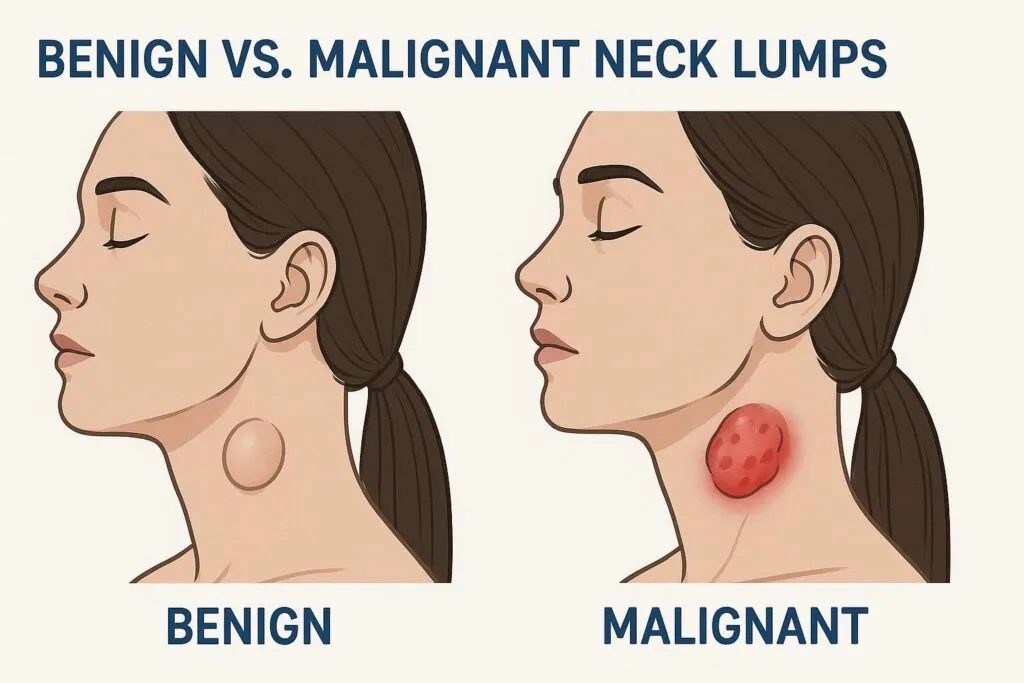
Have you ever found a lump on your neck and immediately worried it was a sign of a serious illness? Stay calm for a moment: not every neck lump is related to a serious condition.
Many cases are actually caused by something benign, such as swollen lymph nodes during a mild infection, a small cyst, or even muscle tension. Sometimes a lump also appears after a minor, harmless injury.
To help you feel more at ease, let's look at the characteristics of neck lumps that are usually harmless and how to manage them properly.
Characteristics of a Neck Lump That Is Not Dangerous
A neck lump is not always dangerous and is often referred to as a benign lump. These benign lumps can appear in various parts of the neck and are usually not related to cancer.
The characteristics of a harmless neck lump are essentially the same in children and adults:
1. Feels Soft and Rubbery
A benign lump often feels soft or rubbery when pressed and can be moved under the skin.
The most common examples are a lipoma (a fatty lump) or a lymph node that has enlarged due to a mild infection.
However, keep in mind that a rubbery texture alone cannot be used as an absolute guide, because some dangerous lumps can also feel soft in their early stages.
2. It Does Not Grow Larger
A lump that stays the same size or shrinks within 2–4 weeks is usually safer. For example, lymph nodes that swell during a cold or sore throat usually shrink once the infection subsides.
On the other hand, if the lump keeps growing or does not get smaller after 1 month, you should see a doctor promptly.
3. Easy to Move and Superficially Located
A benign lump is usually not firmly attached to the tissue beneath it, so it feels easy to move when touched.
It also tends to sit just under the skin (superficial), rather than in the deeper muscle layers. If a lump is hard, rigid, or firmly attached, it warrants attention.
4. No Other Accompanying Symptoms
A benign lump is generally not accompanied by other symptoms, such as prolonged fever, drastic weight loss, night sweats, or severe pain.
If the lump is present without additional symptoms and is not painful, it is usually not dangerous.
However, if systemic symptoms or persistent pain appear, consult a doctor promptly.
5. Smooth Texture
The surface of the neck lump feels smooth and even to the touch. This smooth texture is often found in cysts or lipomas. However, a rough surface may be a sign of abnormal growth.
6. No Other Accompanying Symptoms
A harmless lump is not accompanied by other symptoms, such as fever, weight loss, or fatigue. This indicates the lump is not cancer.
7. Appears After an Injury
If a lump appears on the neck but is painless or only temporary, it is usually caused by an injury, for example a blow to the neck or jaw. This type of lump will disappear within a few weeks.
8. The Lump Does Not Spread
Another characteristic of a harmless neck lump is that it stays in one spot and does not spread to other areas. Rapid spreading or lumps appearing in multiple locations can be a sign of a serious condition.
9. Its Color Does Not Turn Bluish or Blackish
The skin over a harmless lump usually looks normal and does not turn red, blackish, or bluish. A change in color can indicate inflammation or a vascular problem.
10. It Is Not Located Too Deep Under the Skin
A safe lump is usually located in the surface layer or the fat layer beneath the skin. As a result, the lump can be moved and felt easily.
Types of Neck Lumps That Are Not Dangerous
There are several types of lumps that can appear on the neck and are not dangerous. Here are the types you should know:
1. Swollen Lymph Nodes
This is the most common type and is usually related to a mild infection such as a cold, cough, or sore throat.
These lumps are soft, movable, sometimes tender when pressed, and usually shrink after the infection subsides.
2. Cysts
Skin cysts or neck cysts (for example, epidermoid cysts or salivary cysts) that are not infected tend to be painless and movable. However, if infected, they may feel painful and look red.
3. Lipoma
A lipoma is a benign lump formed from fatty tissue that is soft, rubbery, and easy to move. It does not cause pain, and its color is similar to the surrounding skin.
4. Enlarged Thyroid Gland (Goiter)
This lump appears at the front of the neck and originates from the thyroid gland. A goiter can cause difficulty swallowing, hoarseness, coughing, or dizziness when raising the arms.
It is generally not dangerous and is benign, but it requires medical evaluation to determine whether it is related to a thyroid hormone disorder.
How to Treat a Neck Lump That Is Not Dangerous
A harmless neck lump will usually disappear on its own within a few days. To help the lump shrink faster, here is what you can do:
1. Drink Plenty of Water
Adequate water intake can help the immune system fight the mild infections that often cause swollen lymph nodes.
2. Warm Compress
One way to relieve a lump on the left or right side of the neck is to apply a warm cloth compress several times a day. This can ease discomfort.
3. Pain Relievers
If you feel mild pain, you can take pain relievers such as ibuprofen or paracetamol.
4. Antibiotics (If Needed)
If a lump on the left or right side of the neck is caused by a bacterial infection, the doctor will usually prescribe antibiotics to help treat the infection.
5. Surgical Intervention
For large and bothersome lipomas or cysts, the doctor may recommend a minor surgical procedure to remove the lump.
When Should You See a Doctor?
Have your neck lump examined by a doctor promptly if you experience any of the following:
The lump is larger than 2–3 cm, feels hard, is fixed in place, or is located in the supraclavicular area (just above the collarbone).
The lump grows quickly or does not shrink after more than 2–4 weeks.
It is accompanied by systemic symptoms such as prolonged fever, night sweats, or drastic weight loss.
It causes difficulty swallowing or breathing, hoarseness, or appears after a significant injury.
The skin over the lump looks red, painful, or warm, which may indicate an infection.
You can get a comprehensive examination at Tzu Chi Hospital to evaluate a neck lump.
To make an appointment without queuing, you can contact Tzu Chi Hospital via WhatsApp. You can also check the doctors' practice schedules through the Find a Doctor menu.
If the lump gets worse, have it checked right away!
This article has been medically reviewed by dr. Hardy Indradi, Sp.PD (Internal Medicine Specialist)
Topic