

Disease
GERD: Symptoms, Causes, Diagnosis, and Treatment

Written By
Admin • 21 November 2026
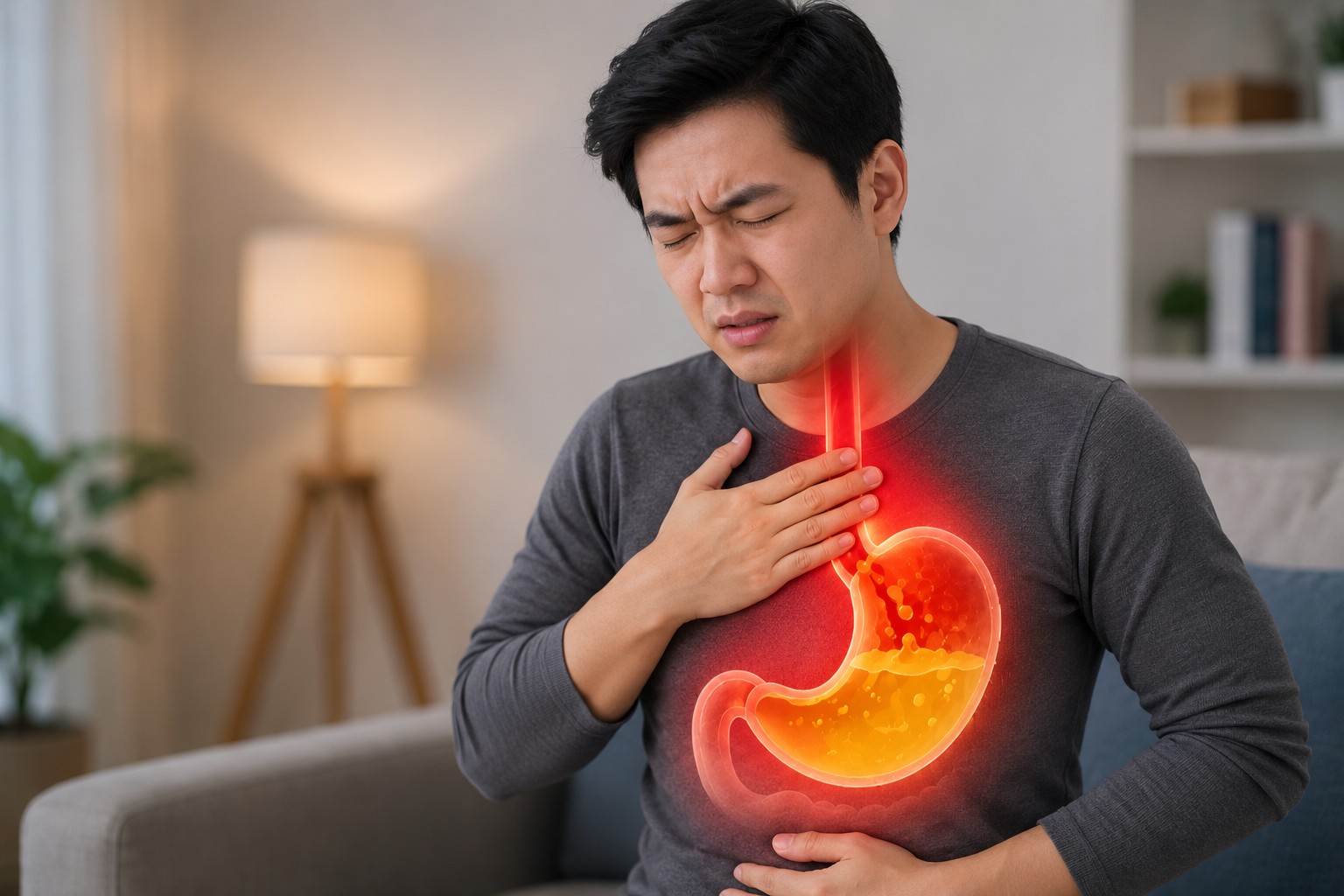
A burning sensation in the chest after eating, acid rising into the throat, or a night-time cough that won't go away may not be ordinary complaints.
Many people dismiss symptoms like these or think they are just "a chill". However, if they happen repeatedly, they may be a sign of GERD (gastroesophageal reflux disease), also known as acid reflux disease.
GERD is a chronic condition that requires serious medical attention and treatment. Let's learn to recognise its symptoms early.
That way, the disease does not develop into a more dangerous problem later on!
What Is GERD?
GERD is a condition in which stomach contents, especially stomach acid, repeatedly flow back into the oesophagus and cause symptoms or complications.
Occasional acid reflux is common. GERD, however, is different because it is a chronic condition that occurs at least twice a week or has a real impact on the oesophagus or other organs.
The line between ordinary reflux and GERD lies in how often it happens, how severe it is, and how much it affects daily life.
To understand why stomach acid can rise, imagine a small valve at the bottom of the oesophagus called the LES (lower oesophageal sphincter).
This valve works like a one-way door, letting food pass down into the stomach but closing tightly so it does not come back up.
If this valve weakens or often relaxes at the wrong times, stomach acid flows back into the oesophagus and irritates its lining, causing a stinging, burning feeling because the oesophagus does not have the same protection against acid as the stomach.
Symptoms of GERD
GERD symptoms vary widely, from mild and easily ignored to severe and involving other organs. Here are two groups of symptoms to recognise early.
Early Symptoms
The most common typical symptom of GERD is a burning or hot sensation in the chest (often called heartburn).
This sensation spreads from the stomach up to the throat and usually appears after eating or when lying down.
What often keeps people from realising they have the condition is that early symptoms are not always a clear burning sensation.
Some people instead complain of:
- discomfort;
- a feeling of something stuck in the chest;
- more saliva production than usual;
- slight difficulty swallowing.
Advanced and Severe Symptoms
If GERD is not treated, symptoms can become more complex and even involve organs outside the digestive tract.
For example, a chronic cough that does not go away despite taking cough medicine, a hoarse voice, and a sore throat that keeps coming back.
This happens because stomach acid that rises high enough can reach the throat and vocal cords, so patients often think they simply have an ordinary sore throat.
Causes and Risk Factors
GERD does not have a single cause; it results from a combination of physical conditions and daily habits, including the following factors.
Basically, GERD occurs because of a combination of anatomical and lifestyle factors. Some causes include:
- weakening of the valve at the bottom of the oesophagus, so that it can no longer close properly;
- hiatal hernia, when part of the stomach is pushed into the chest cavity through a small opening in the diaphragm, making the acid barrier less effective.
The good news is that most GERD risk factors are related to lifestyle and can be changed.
Factors to watch out for include:
- being overweight (especially abdominal fat that pushes the stomach upwards);
- smoking;
- excessive alcohol consumption;
- a diet high in fat and low in fibre;
- eating late at night and going straight to bed.
There are also risk factors that cannot be controlled, such as:
- pregnancy;
- increasing age;
- a family history of GERD.
Diagnosis
Doctors can often recognise GERD from the symptoms described by the patient, especially recurring burning in the chest and acid rising into the throat.
However, in many cases further tests are still needed to confirm the diagnosis, assess its severity, or rule out other conditions that mimic GERD.
One of the most common tests is an upper gastrointestinal endoscopy, which uses a small camera inserted through the mouth to look directly at the oesophagus and stomach.
There is also 24-hour oesophageal pH monitoring, in which a small device placed in the oesophagus records acid levels for a full day to prove whether acid reflux is actually occurring.
In certain situations, the doctor may recommend additional tests, such as an X-ray of the oesophagus and stomach with contrast fluid to look for structural abnormalities when dangerous cell changes are suspected.
GERD Treatment
GERD treatment combines medication with changes in daily habits for the best results, covering the following two approaches.
Medical Treatment
The most effective class of medicines is proton pump inhibitors (PPIs). The name may sound unfamiliar, but the way they work is simple: they block the part of stomach cells that produces acid, so stomach acid levels drop significantly.
Commonly prescribed examples include omeprazole, lansoprazole, pantoprazole, and esomeprazole, which are usually recommended to be taken 30–60 minutes before breakfast for the best effect.
In severe cases of GERD that do not improve despite taking medication regularly, surgery may be a further option.
Self-Care and Lifestyle Changes
Lifestyle changes are an essential part of managing GERD, often just as important as, or even more effective than, medication alone.
Some measures include:
- losing weight for those who are overweight;
- raising the pillow or head of the bed by about 15–20 cm;
- not lying down for at least 3 hours after eating;
- avoiding trigger foods such as fried foods, chocolate, mint, garlic, tomatoes, coffee, alcohol, and fizzy drinks;
- eating small, frequent meals, which has been shown to be better than eating large meals at once;
- quitting smoking;
- managing stress with calming activities;
- avoiding clothing that is too tight around the abdomen, which also makes a real difference.
Complications
Untreated GERD does not stop at discomfort; it can cause serious damage to the oesophagus and other organs.
If not properly treated, the oesophagus can become inflamed and develop sores, which, if severe, can cause bleeding.
The oesophagus can also narrow due to scar tissue formed from repeated injury, making swallowing increasingly difficult, to the point that even soft food feels stuck.
Among these complications, the one that most needs watching is Barrett's oesophagus, a change in the cells lining the oesophagus caused by constant acid exposure over many years.
Prevention
The good news is that GERD can largely be prevented by adjusting daily habits, including the following steps.
Preventing GERD essentially focuses on changing habits:
- maintaining an ideal body weight;
- adopting a healthy, regular eating pattern;
- avoiding smoking and excessive alcohol consumption;
- managing stress effectively, which complements the other preventive measures;
- getting used to eating dinner earlier;
- not lying down right after a heavy meal, a simple habit that can make a big difference.
When Should You See a Doctor?
See a doctor promptly if you have heartburn more than twice a week or symptoms that do not improve with antacids.
Also watch out for serious signs such as persistent nausea or vomiting, unexplained weight loss, black tarry stools or vomiting blood, and severe chest pain spreading to the arm or jaw, which needs immediate evaluation to rule out a heart problem.
The earlier reflux is recognised, the better your chances of living comfortably without the threat of long-term complications.
You can schedule an examination directly via Tzu Chi Hospital WhatsApp or find a digestive specialist through Find a Doctor.
Services at Tzu Chi Hospital can be accessed through BPJS Kesehatan (Indonesia's national health insurance), private insurance, or self-pay, according to your needs.
This article has been reviewed by Dr. Stefani Yoelita, Sp.PD, FINASIM, AIFO-K, CPM, FISQua.
References
- Katz, P. O., Dunbar, K. B., Schnoll-Sussman, F. H., Greer, K. B., Yadlapati, R., & Spechler, S. J. (2022). ACG Clinical Guideline for the Diagnosis and Management of Gastroesophageal Reflux Disease. American Journal of Gastroenterology, 117(1), 27–56.
- Ministry of Health of the Republic of Indonesia. (2014). Clinical Practice Guidelines for Doctors in Primary Healthcare Facilities (in Indonesian). Ministry of Health RI.
- Gyawali, C. P., et al. (2018). Modern diagnosis of GERD: the Lyon Consensus. Gut, 67(7), 1351–1362.
- Eusebi, L. H., Ratnakumaran, R., Yuan, Y., Solaymani-Dodaran, M., Bazzoli, F., & Ford, A. C. (2018). Global prevalence of, and risk factors for, gastro-oesophageal reflux symptoms: a meta-analysis. Gut, 67(3), 430–440.
- World Health Organization. (2020). Noncommunicable Diseases Country Profiles 2020. Geneva: WHO.
Topic