

Health
Aloe Vera Benefits for Skin and Health: Which Are Proven?

Written By
Admin • 24 November 2026
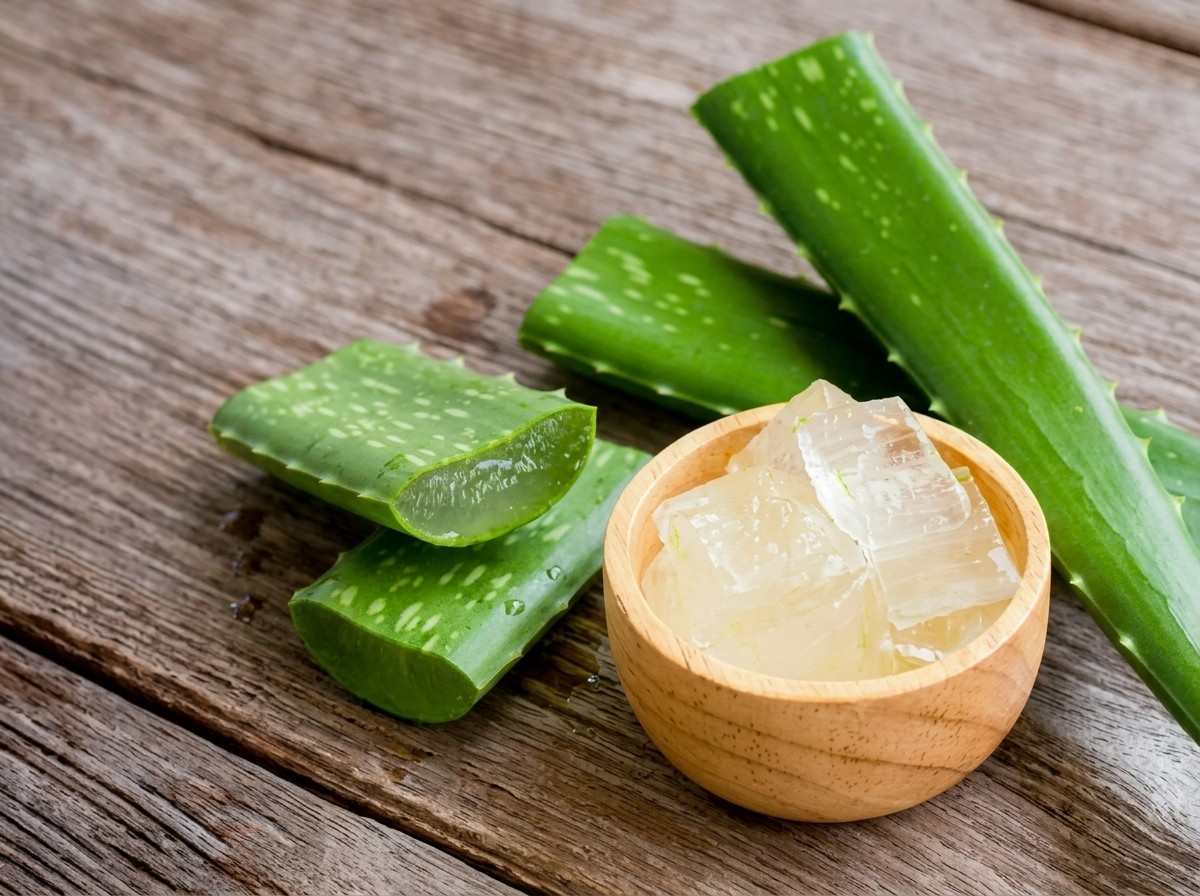
Aloe vera is a plant whose gel is widely used for skin care, especially for minor burns, dry skin, and irritation. Aloe vera gel is generally safe when applied to the skin. However, aloe taken by mouth, especially its yellow latex, can cause side effects, so more caution is needed.
Almost every household in Indonesia knows aloe vera, whether as a potted plant in the garden or as an ingredient in skin and hair care products. Many claims circulate about its benefits, from promoting hair growth to lowering blood sugar. To avoid missteps, learn which aloe vera benefits are backed by research, how to use it safely, and which side effects to watch for.
Getting to Know Aloe Vera and Its Parts
Aloe vera is a succulent with thick leaves filled with clear gel. Aloe products can be made from different parts of the leaf, each with different properties:
- Gel, the clear inner part of the leaf that is most often used on the skin.
- Latex, the yellow sap just under the leaf skin, which is a strong laxative.
- Whole-leaf extract, which contains both the gel and the latex.
This difference matters because the safety of each part is not the same. The gel is generally safe for the skin, while latex and whole-leaf extract taken by mouth carry a greater risk of side effects.
Benefits of Aloe Vera for the Skin
Most of the scientific evidence on aloe vera concerns its use on the skin. Here are the most widely studied benefits.
1. Helping Minor Burns Heal
Clinical research shows that aloe vera gel applied to the skin may help speed the healing of first- and second-degree burns and reduce pain. Use it only on minor burns that have already been cooled under running water.
2. Soothing Sunburned Skin
Aloe vera gel gives a cooling sensation to skin that is red after sun exposure. However, evidence that aloe vera speeds the healing of sunburn is still limited.
3. Moisturising Dry Skin
The water and polysaccharides in aloe vera gel help keep skin moisturised. This is why aloe vera is found in many moisturisers and after-sun products.
4. Supporting Acne Care
Several small studies show that aloe vera gel used together with acne medication may help improve acne. Aloe vera is not a substitute for acne treatment from a doctor.
5. Easing Mild Psoriasis
Applying aloe vera may help reduce redness and scaling in mild psoriasis. However, research results are mixed, so the main treatment should still follow your doctor's advice.
6. Relieving Mouth Ulcers and Oral Lichen Planus
Aloe vera gel applied to mouth ulcers or oral lichen planus lesions may help ease symptoms. Use products made specifically for the mouth.
7. Caring for the Scalp and Hair
Aloe vera is often used as a hair mask because it moisturises and cools the scalp. Claims that aloe vera can regrow hair or treat baldness are not supported by strong evidence.
Benefits of Aloe Vera for General Health
The benefits of taking aloe vera by mouth still need further research. Some commonly discussed ones include:
8. Blood Sugar
Some early studies suggest that aloe vera gel taken by mouth may help lower blood sugar levels. However, the evidence is not enough to make it a diabetes treatment, and taking it alongside diabetes medication can make blood sugar drop too low.
9. Constipation
Aloe latex is a strong laxative. Even so, since 2002 the U.S. Food and Drug Administration (FDA) has required aloe latex to be removed from over-the-counter laxatives because of insufficient safety data. For this reason, aloe vera is not recommended as a constipation remedy.
How to Use Aloe Vera Safely
Using Fresh Aloe Vera
- Wash the aloe leaf thoroughly, then cut off the base.
- Stand the leaf upright for 10–15 minutes so the yellow latex drains out.
- Peel off the leaf skin and take only the clear gel.
- Rinse the gel with clean water to remove any remaining latex.
- Test it on a small patch of skin, such as the inner arm, and wait 24 hours before using it on a larger area.
Store leftover gel in a sealed container in the refrigerator and use it within a few days.
Choosing Aloe Vera Products
When choosing a ready-made product, make sure it is registered with BPOM (the Indonesian Food and Drug Authority). For sensitive skin, choose products without fragrance or alcohol.
Side Effects and Who Should Be Careful
Aloe vera gel applied to the skin is generally safe, but it can occasionally cause stinging, itching, rash, or an allergic reaction. Stop using it if any of these occur.
Aloe vera taken by mouth carries greater risks, including:
- aloe latex can cause stomach cramps and diarrhoea, as well as electrolyte imbalance with continued use;
- consuming aloe leaf extract has been linked to cases of liver inflammation (hepatitis);
- the International Agency for Research on Cancer (IARC) classifies whole-leaf aloe vera extract as possibly carcinogenic to humans;
- aloe vera can interact with diabetes medication, heart medication such as digoxin, blood thinners, and laxatives.
Avoid taking aloe vera by mouth without a doctor's advice if you:
- are pregnant or breastfeeding;
- have kidney, liver, or heart disease;
- have inflammatory bowel disease;
- regularly take certain medications;
- are about to have surgery.
Do not apply aloe vera to severe burns, deep wounds, or infected wounds. These need to be treated by medical professionals.
Frequently Asked Questions about Aloe Vera
Is it safe to use aloe vera on the face every day?
It is generally safe for most people, especially as pure gel or a BPOM-registered product. Do a patch test first, and stop if your skin stings, itches, or develops a rash.
Can aloe vera remove acne scars?
Aloe vera can help keep skin moisturised, but there is no strong evidence that it can remove acne scars. Troublesome acne scars should be checked by a dermatologist.
Is it safe to drink aloe vera juice?
Aloe vera gel taken by mouth for a short period is generally considered safe. However, products that contain latex or whole-leaf extract can cause side effects. Consult a doctor first, especially if you have a chronic illness or take medication regularly.
Can aloe vera be applied to burns?
Yes, for minor burns without large blisters, after cooling them under running water for about 20 minutes. Burns that are large, deep, or have large blisters should be checked by a doctor right away.
Can aloe vera make hair grow thicker?
Aloe vera can make the scalp feel more moisturised and cool. However, there is no strong evidence that it can regrow hair or treat hair loss.
When Should You See a Doctor?
See a doctor promptly if:
- your skin becomes red, swollen, very itchy, or blistered after using aloe vera;
- a burn is large, deep, has large blisters, or affects the face, hands, feet, or genital area;
- a wound does not improve, has pus, or comes with fever;
- you have diarrhoea, stomach pain, or weakness after consuming aloe vera;
- you want to use aloe vera for acne, psoriasis, or another skin problem that is not getting better.
You can also book a skin check-up via WhatsApp Tzu Chi Hospital.
Find a dermatologist at Tzu Chi Hospital for advice on skin care and safe use of aloe vera, or book a consultation via WhatsApp Tzu Chi Hospital or call our Call Center at 021 5095 0888.
This article has been reviewed by the Tzu Chi Hospital Medical Team
Topic