

Tindakan Medis & Terapi
LASIK Surgery: Procedure, Candidate Requirements, and Risks

Written By
Admin • 25 November 2026
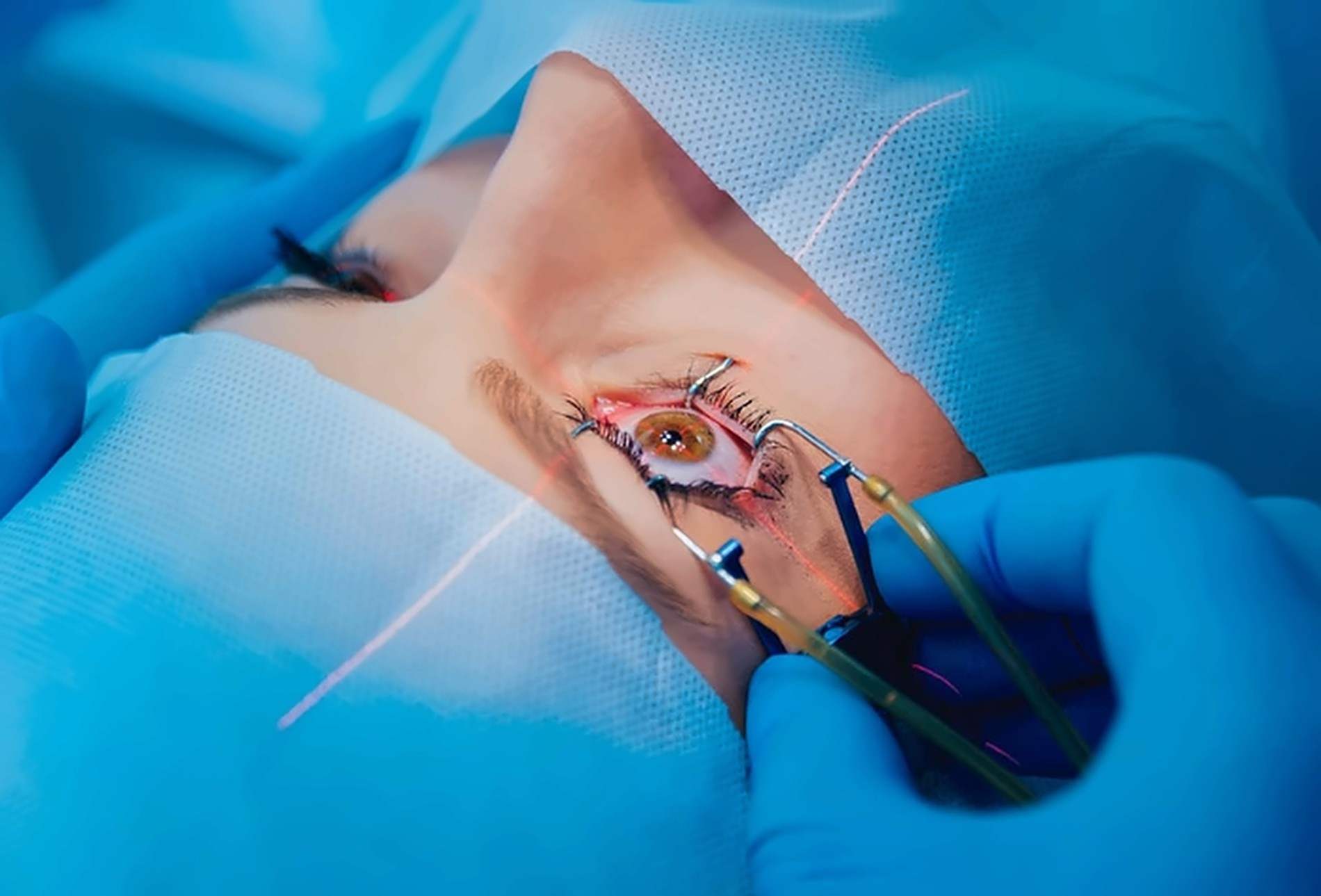
LASIK surgery has changed the lives of millions of people around the world by freeing them from dependence on glasses or contact lenses. For many, simple things like exercising without glasses slipping down, swimming with clear vision, or seeing their child's face as soon as they wake up become a truly meaningful freedom.
In Indonesia, more and more people are considering this laser vision correction procedure. Interest comes especially from those whose daily activities are hindered by glasses, such as field workers, athletes, or employees who face a computer screen all day.
Read also: How to Treat Swollen Eyes: Know the Causes, Treat Them Properly
However, not everyone is suitable for LASIK, so understanding the procedure thoroughly is very important before making a decision. This article therefore covers everything from the types of procedures, candidate requirements, and surgical steps to the recovery process, so you can make the right decision together with a specialist doctor.
What Is LASIK Surgery?
LASIK is not merely a cosmetic procedure, but a medical procedure that changes the way the eye focuses light, namely by reshaping the cornea with a laser so that light falls precisely on the retina.
LASIK (short for Laser-Assisted In Situ Keratomileusis) is eye surgery that uses a laser to reshape the clear surface at the front of the eye (the cornea). Its goal is to correct vision problems such as nearsightedness (myopia), farsightedness (hyperopia), and astigmatism. The procedure has been around since the early 1990s and continues to develop with increasingly advanced and safe technology.
Basically, vision becomes blurry because the shape of the cornea or the length of the eyeball prevents incoming light from falling precisely on the light-sensitive layer at the back of the eye (the retina). Imagine a camera whose focus is slightly off, so the photo looks blurry. By reshaping the curve of the cornea, LASIK brings the focus of light back onto the retina so that vision becomes clear without the need for glasses or contact lenses.
In the LASIK procedure, the eye surgeon first creates a thin, hinged layer on the surface of the cornea (called a flap) using a high-precision laser device. Once the flap is lifted, the doctor uses another type of laser to reshape the corneal tissue underneath, then the flap is returned to its original position, where it adheres and heals on its own without stitches. The process can be likened to opening a thin book cover, precisely polishing the page beneath it, then closing it again—the cornea has an excellent natural ability to heal, so the flap can reattach without stitches.
Types of Laser Vision Correction Procedures
Laser vision correction is not limited to LASIK. There are several types of procedures, each with its own advantages, so the best choice depends greatly on your eye condition and lifestyle.
Conventional LASIK and Bladeless LASIK
Conventional LASIK creates the corneal flap using a very fine micro-surgical blade. Meanwhile, bladeless LASIK (also known as all-laser LASIK or iLASIK) uses only lasers, both to create the flap and to reshape the cornea, with no blade at all.
Bladeless LASIK is considered safer and more precise because it does not involve a blade, so the resulting flap is smoother and the risk of flap problems is lower. With a laser, the flap thickness from one point to another is much more consistent, so the doctor can calculate the remaining corneal tissue more accurately and safely.
There is also a more advanced variant of LASIK, namely LASIK with more detailed eye mapping (known as topography-guided or wavefront-guided LASIK). This technology “reads” the subtle imperfections unique to each person's eye, like creating an eye fingerprint, then corrects them on a personalised basis. It is very useful for patients with subtle vision problems that ordinary glasses cannot fully correct, including those who often drive at night and want more comfortable night vision.
PRK (Photorefractive Keratectomy)
PRK is a laser procedure that predates LASIK. The difference is that in PRK the doctor does not create a flap, but first removes the outermost cell layer of the cornea (the epithelium), and only then applies the laser to reshape the cornea. This outer layer will grow back on its own within 3–5 days.
PRK is suitable for patients who cannot undergo LASIK because their cornea is too thin, as well as for those in high-risk professions such as contact sports athletes (boxing, martial arts) and military personnel whose eyes are prone to impact. Because PRK leaves no flap that could shift on impact, it is a safer option for them. Recovery from PRK is longer and more uncomfortable than LASIK, and during recovery patients usually wear a protective lens (bandage contact lens) for 4–5 days to protect the healing corneal surface. Even so, the final results are equivalent to LASIK, with no risk of flap problems at all.
SMILE (Small Incision Lenticule Extraction)
SMILE is the newest laser procedure. Instead of opening a large flap, the doctor makes only a small incision (about 2–4 mm) to remove a small piece of corneal tissue (a lenticule), which changes the curve of the cornea according to the correction needed. SMILE can currently only be used to correct nearsightedness and astigmatism.
Its advantage is that the procedure keeps more of the nerve fibres in the cornea intact, so the risk of dry eye after surgery is lower and there is no risk of flap problems. Because the outer layer of the cornea is not disturbed much, the structural strength of the cornea is also better preserved—making SMILE a very suitable option for those with a history of dry eye or who work long hours every day in air-conditioned rooms. Its drawback is that SMILE requires very specialised surgical skill and is generally only available at larger eye surgery centres.
Requirements for an Ideal LASIK Candidate
Not everyone is automatically allowed to undergo LASIK, because a number of requirements must be met first. These cover age, corneal condition, eye health, and overall physical health.
Age Criteria
The ideal LASIK candidate is at least 18–21 years old, preferably waiting until their glasses prescription has been truly stable for at least the past year. There is no absolute upper age limit, but with age, other conditions such as cataracts or presbyopia (difficulty seeing up close that appears in your 40s) need to be considered and may require a different approach. Correcting nearsightedness with LASIK will not prevent presbyopia later on, so the doctor will explain realistic expectations according to the patient's age.
A stable prescription is very important. If the prescription is still changing, it is a sign that the eyes are still “moving”, and LASIK done now risks needing to be repeated because the myopia may increase again—this happens especially often in the teenage years to the early twenties. Being patient and waiting until your eyes are truly stable is a wise decision that avoids the need for repeat surgery, which costs time and money.
Corneal Thickness
A sufficiently thick cornea is a non-negotiable requirement for LASIK. The cornea needs to be thick enough for the doctor to create a flap and remove some tissue, while still leaving enough layers for the eye's structure to remain strong and not change shape—like sanding a board that must be thick enough not to warp after sanding. The higher a person's myopia, the more corneal tissue needs to be removed, so patients with very high myopia need to be evaluated extra carefully using special corneal scanning.
Patients whose cornea is too thin or abnormally shaped (as in keratoconus, a cornea that bulges like a cone) are generally not advised to undergo LASIK. The good news is that if the cornea is judged less than ideal for LASIK, the doctor can still recommend alternative procedures such as PRK, which conserves more tissue.
Eye Health Conditions
Before LASIK, the eyes must be free of a number of conditions that could interfere with the results of surgery or the healing process, including keratoconus, severe dry eye, high eye pressure (glaucoma), cataracts, retinal disease, and active eye infection or inflammation. That is why a thorough examination by an ophthalmologist before surgery is very important to detect these conditions early.
Mild to moderate dry eye does not always mean you have to cancel LASIK. Doctors usually recommend using artificial tears regularly for several weeks before surgery to prepare the surface of the eye, so the risk of complaints afterwards can be kept to a minimum.
General Health Conditions
It is not only eye health but also overall physical health that determines eligibility for LASIK. Conditions to watch out for include autoimmune diseases (lupus, rheumatoid arthritis), poorly controlled diabetes, and the use of certain medications that may interfere with healing—such as isotretinoin and long-term corticosteroids, which need to be stopped some time before surgery.
Pregnancy and breastfeeding also mean LASIK needs to be postponed temporarily, because hormonal changes can make the eye prescription fluctuate. After giving birth and stopping breastfeeding, the prescription needs to be re-checked before LASIK is performed. That is why it is very important to be honest about your medical history and all the medications you take with the doctor during the initial consultation.
LASIK Surgery Procedure: Step by Step
Knowing the flow of LASIK surgery from start to finish can reduce anxiety before the procedure. Broadly, the stages are divided into the pre-operative evaluation and the procedure on the day of surgery.
Pre-operative Evaluation
Before LASIK, patients undergo a series of comprehensive eye examinations, including a detailed check of their myopia/hyperopia/astigmatism prescription, mapping of the shape and thickness of the cornea, examination of the inside of the eye using a special microscope, a retinal examination, and measurement of eye pressure. The aim is to map the condition of the eye thoroughly so the doctor can calculate a safe amount of correction while ensuring there are no hidden conditions that could cause problems.
One thing that is often overlooked: soft contact lens wearers must stop wearing their lenses at least 2 weeks before the examination, while hard contact lens wearers must stop at least 4 weeks before. Contact lenses can temporarily change the shape of the cornea, so if measurements are taken while the cornea is still “pressed” by the lens, the results may be wrong and the correction calculation inaccurate.
Surgery Day and the Procedure
On the day of surgery, local anaesthetic eye drops are applied so the procedure is not painful, and the patient remains fully awake throughout. An eyelid holder (speculum) is placed to keep the eye open, so there is no need to worry about blinking accidentally. For LASIK, the doctor first creates the flap, then uses the laser to reshape the cornea—the laser process lasts only a few seconds to a few minutes depending on the amount of correction, and during that time the patient simply looks at a point of light as a focus.
Once finished, the flap is returned to its position. Total surgery time per eye is usually only about 10–15 minutes, and most patients can go home the same day. It is best to be accompanied, as vision is still temporarily blurry.
Recovery after LASIK Surgery
The success of LASIK is also largely determined by the recovery period. Here is what you need to know and follow so that healing goes optimally.
The First Few Days
In the first 24–48 hours after LASIK, it is normal for vision to still be slightly blurry, for the eyes to sting or feel gritty, and for you to be more sensitive to glare. This is a normal part of the healing process and usually improves quickly. The doctor will prescribe antibiotic and anti-inflammatory eye drops to prevent infection and reduce inflammation—it is important to use them on schedule as recommended. Rest is strongly recommended on the first day, and most importantly, resist the urge to rub your eyes, because the newly created flap can still shift easily.
Most patients already notice much clearer vision within the first 24–48 hours, although the best results are usually only reached within a few weeks to months. The doctor will schedule check-ups on the first day, first week, first month, and three months after surgery. During this time, wearing an eye shield while sleeping is strongly recommended, and artificial tears need to be used regularly several times a day because natural tear production is temporarily reduced—this usually recovers on its own within a few months.
Activity Restrictions
Activity restrictions after LASIK must be followed strictly, because the corneal flap is vulnerable to mechanical disturbance during the early healing period. Several activities should be avoided after LASIK, namely:
- Rubbing or touching the eyes for at least one week.
- Swimming or soaking in water for 2–4 weeks.
- Strenuous exercise or contact sports for 4–6 weeks.
- Exposure to dust or dusty environments in the first few weeks.
In addition, eye makeup should also be postponed for several weeks to prevent cosmetic particles from entering the healing flap area. By following these restrictions with discipline, patients can reduce the risk of flap displacement and help the healing process go optimally.
Risks and Complications of LASIK
As a medical procedure, LASIK still carries risks that must be understood before making a decision. Some things that may occur include:
- Dry eye, which may be temporary or last longer.
- Rings of light or glare around lights, especially at night (haloes and glare).
- Slight over- or under-correction, so that glasses are still needed occasionally.
- Progressive thinning of the cornea (ectasia, very rare).
- Flap problems.
Most of these complaints are temporary and improve as healing progresses. Serious, permanent complications are very rare, especially when patients are carefully selected and the surgery is performed by an experienced doctor. That is precisely why speaking openly with your ophthalmologist before deciding is so important, so that your expectations are realistic and you understand how each risk is prevented and handled should it arise.
When Should You See a Doctor?
Don't delay a consultation if your vision is declining quickly, your glasses prescription changes often, or your eyes feel uncomfortable for a long time. Also watch out for excessive glare at night, double vision, dry eyes that interfere with your activities, or vision that keeps getting blurrier even with glasses. In patients who have already had LASIK, severe pain, a sudden drop in vision, or red eyes with discharge are also signs that must not be ignored.
Read also: Lower Right Eye Twitching: Causes & How to Treat It Medically
LASIK and other laser vision correction procedures permanently change the structure of the cornea, so a thorough evaluation by a specialist is a step that cannot be skipped to determine whether you are the right candidate and which procedure is safest.
Want to be free from glasses or contact lenses? Schedule an examination through WhatsApp Tzu Chi Hospital to consult with our ophthalmologists. You can also use Find a Doctor to match your schedule and needs. Tzu Chi Hospital serves patients with BPJS Kesehatan (national health insurance), private insurance, and self-payment.
Article reviewed by Dr. Gladys, Sp.M, M.Res
References
- American Academy of Ophthalmology. (2024). LASIK – Laser Eye Surgery. AAO Clinical Practice Guidelines.
- Bower, K.S., et al. (2023). Refractive Surgery: LASIK, PRK, and SMILE—A Comparison. Ophthalmology, 130(2), 150-165.
- Reinstein, D.Z., et al. (2023). SMILE vs LASIK: A Meta-analysis of Visual Outcomes and Complications. Journal of Refractive Surgery, 39(1), 12-28.
- Gomes, J.A.P., et al. (2023). Delphi Consensus on Dry Eye Disease After Refractive Surgery. Cornea, 42(5), 543-559.
- Indonesian Ophthalmologists Association (PERDAMI). (2022). Clinical Practice Guide for Refractive Surgery. PERDAMI Central Board.
Topic