

Tindakan Medis & Terapi
Constantly Stuffy Nose? Learn About Radiofrequency Turbinate Reduction

Written By
Admin • 22 November 2026
When Nasal Congestion Starts Affecting Your Quality of Life
Nasal congestion is often considered a minor complaint. However, when it persists, it can significantly affect quality of life, causing sleep disturbances, difficulty breathing, and reduced productivity in daily activities.
Read Also: 10 Signs of Appendicitis, Including Nausea and Vomiting!
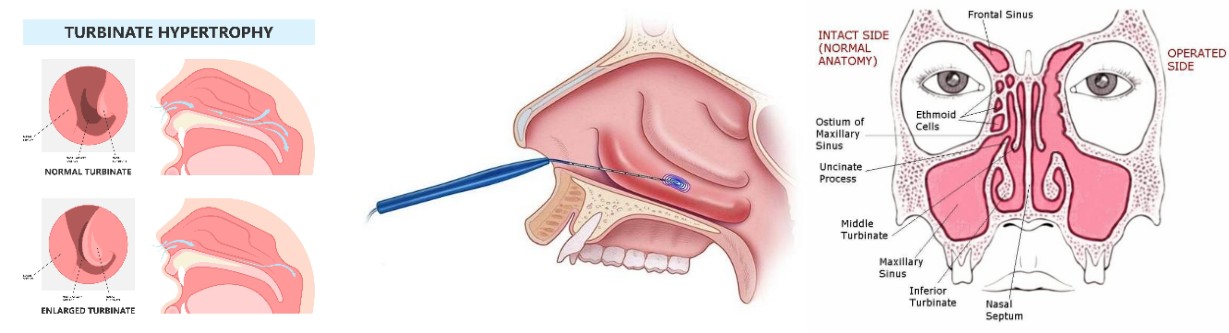
One of the most common causes is enlarged nasal turbinates (turbinate hypertrophy). When medication is no longer effective, a modern, more comfortable, and minimally invasive treatment option is available: radiofrequency turbinate reduction.
What Is Radiofrequency Turbinate Reduction?
Radiofrequency turbinate reduction is a minimally invasive medical procedure designed to reduce the size of the nasal turbinates using radiofrequency energy. This technology generates controlled heat to reduce enlarged tissue while minimizing damage to the surrounding structures.
Definition
"Radiofrequency turbinate reduction is a surgical procedure performed to reduce the size of the nasal turbinates using laser and radiofrequency technology, allowing normal and unobstructed airflow through the nose. This minimally invasive technique does not require incisions. Patients can benefit from faster recovery and minimal pain."
This procedure is increasingly used in modern ENT practice because it offers greater patient comfort and effective results in improving nasal airflow.
Understanding the Nasal Turbinates and Their Functions
The nasal turbinates are structures inside the nose that function to:
-
Filter dust and other particles from inhaled air.
-
Warm and humidify the air.
-
Regulate airflow during breathing.
However, when the turbinates become enlarged or hypertrophic, they can obstruct normal airflow.
Conditions and Symptoms: When Should You Be Concerned?
Nasal turbinate enlargement, also known as turbinate hypertrophy, is a condition in which the structures inside the nose become swollen, causing various symptoms such as nasal congestion, difficulty breathing comfortably, snoring, and frontal headaches.
Turbinate hypertrophy can be caused by allergic and non-allergic rhinitis. Environmental factors such as dust and tobacco exposure, as well as pregnancy, can also contribute to turbinate swelling.
Common Symptoms
-
Chronic nasal congestion.
-
Difficulty breathing comfortably.
-
Snoring during sleep.
-
Sleep disturbances.
-
Pain or pressure in the forehead.
-
Reduced sense of smell.
Causes of Enlarged Nasal Turbinates
Several factors can contribute to turbinate hypertrophy, including:
-
Allergic rhinitis: dust, pollen, and pet dander.
-
Non-allergic rhinitis.
-
Exposure to air pollution and cigarette smoke.
-
Hormonal changes, such as during pregnancy.
-
Recurrent respiratory tract infections.
Why Is Turbinate Reduction Necessary?
In the early stages, treatment usually involves medications such as antihistamines or nasal sprays. However, if symptoms persist, turbinate reduction can be an effective solution to:
-
Reopen the nasal airway.
-
Reduce nasal congestion.
-
Improve sleep quality.
-
Reduce the risk of complications such as sinusitis.
Advantages of Radiofrequency Turbinate Reduction
Compared with conventional methods, this technique offers several advantages:
-
Minimally invasive, with no incisions required.
-
Minimal pain.
-
Low risk of bleeding.
-
Short procedure time, approximately 15–30 minutes.
-
Faster recovery.
-
Can be performed as an outpatient procedure.
How Is the Procedure Performed?
-
The patient is given local anesthesia.
-
The ENT specialist inserts a radiofrequency device into the nasal turbinate.
-
Controlled thermal energy is used to reduce the enlarged turbinate tissue.
-
No incision is required, and bleeding is minimal.
-
The patient can return home on the same day.
Recovery Period and Expected Results
-
Patients can resume light activities within 1–2 days.
-
Improvement in breathing may be noticeable within several days to weeks.
-
The nose feels more open and comfortable.
-
Long-term benefits include improved quality of life.
Who Is Suitable for This Procedure?
This procedure may be suitable for:
-
Patients with chronic nasal congestion.
-
Patients whose symptoms do not improve with medication.
-
Patients experiencing sleep disturbances due to nasal congestion.
-
Patients with a history of chronic allergic rhinitis.
Risks and Side Effects
This procedure is generally considered safe. However, minor risks and side effects may still occur, including:
-
Temporary discomfort.
-
Nasal dryness or crusting.
-
Mild swelling after the procedure.
With appropriate treatment and care, these effects are usually temporary.
Why Choose Radiofrequency Technology?
Modern ENT treatment emphasizes:
-
High precision.
-
Minimal tissue trauma.
-
Patient comfort.
Radiofrequency turbinate reduction is an ideal option for patients seeking an effective solution without undergoing major surgery.
Nasal congestion is not always just a common cold symptom. When persistent, it can affect sleep quality, concentration, and overall health.
Read Also: 15 Hospitals Offering Mammography Services in Indonesia and Their Addresses
With radiofrequency technology, enlarged nasal turbinates can be treated effectively without major surgery.
Consult an ENT specialist if you experience persistent nasal congestion. Click below to chat via WhatsApp and book a consultation. Get the examination and treatment recommendations best suited to your condition.
References
-
Passali D et al. Treatment of inferior turbinate hypertrophy: a randomized clinical trial. Annals of Otology, Rhinology & Laryngology.
-
Coste A et al. Radiofrequency is a safe and effective treatment of turbinate hypertrophy. Laryngoscope.
-
American Academy of Otolaryngology–Head and Neck Surgery (AAO-HNS).
-
Eccles R. Understanding nasal airflow and congestion. Respiratory Physiology & Neurobiology.
-
Sapci T et al. Comparison of radiofrequency tissue ablation and surgical techniques for turbinate reduction.
This article has been reviewed by Dr. Satrio Wishnu Pratomo, B.Med.Sc, Sp.THT-BKL.
Topic