

Disease
Lung Tumors: Symptoms, Types, and Medical Treatment

Written By
Admin • 24 November 2026
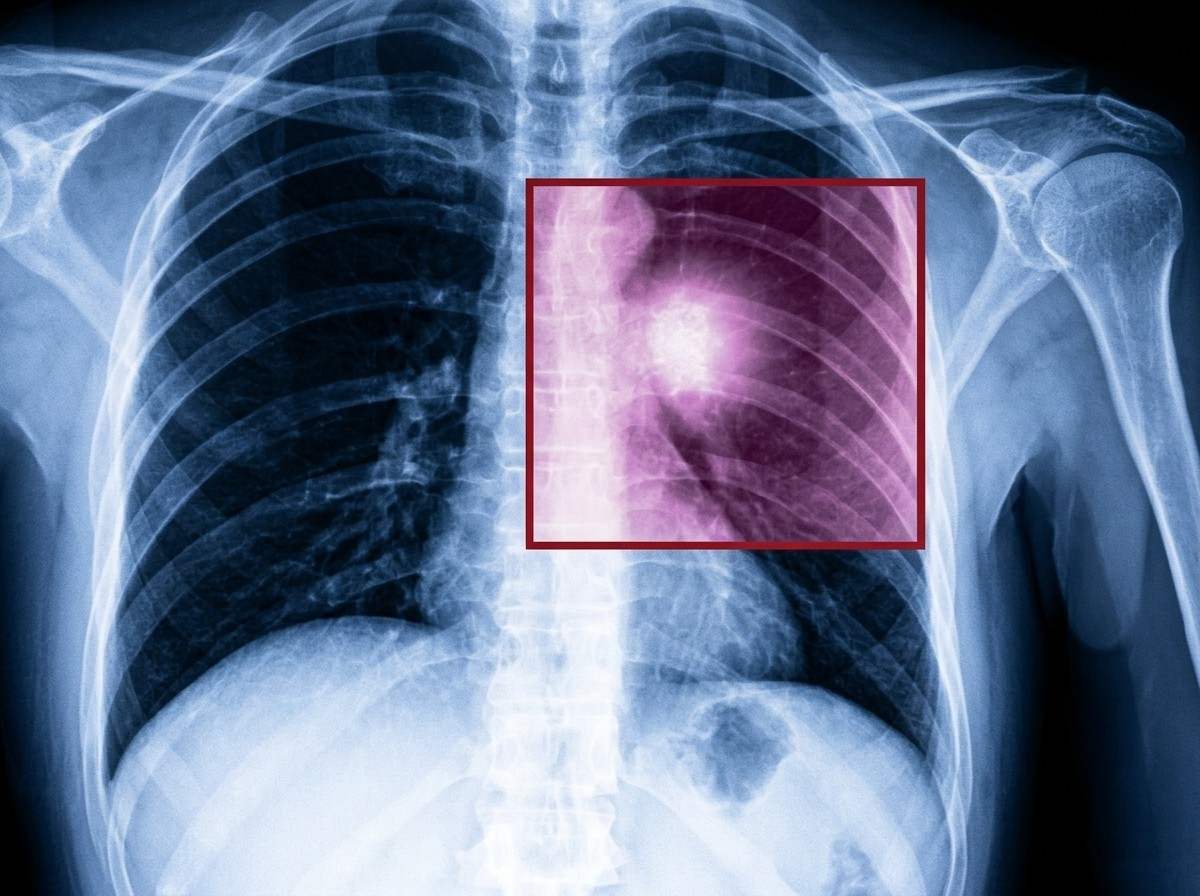
Hearing the words “lung tumor” can cause considerable concern for patients and their families. However, it is important to understand that not all lung tumors are malignant.
Some lung tumors are benign, do not require aggressive treatment, and can often be managed through regular monitoring. Therefore, understanding the differences between benign and malignant tumors, recognizing warning signs, and learning about available medical treatments are important first steps.
With the right information, you can approach this condition with greater confidence and make informed decisions together with your healthcare team.
What Is a Lung Tumor?
A lung tumor is an abnormal growth of cells within lung tissue. Under normal conditions, body cells divide in a controlled manner, replacing old cells with new ones as needed.
However, when the mechanisms that regulate cell growth become disrupted, cells may continue multiplying uncontrollably. Over time, these cells accumulate and form a lump or mass.
Lung tumors can be benign, meaning they do not spread to other parts of the body and generally remain localized. They can also be malignant, commonly known as lung cancer, which can invade surrounding tissues and spread to other organs through the bloodstream or lymphatic system.
You may have encountered the term “pulmonary nodule” in a chest X-ray or CT scan report. This finding can understandably cause anxiety, but a pulmonary nodule does not automatically indicate cancer.
A pulmonary nodule is a small, round or oval-shaped growth measuring less than 3 cm. Many pulmonary nodules are benign and may represent residual changes from previous infections, such as tuberculosis (TB) or fungal infections that have already healed.
Because tuberculosis remains relatively common in Indonesia, these findings are not unusual. Meanwhile, growths larger than 3 cm are classified as lung masses and generally require more thorough evaluation to determine whether they are benign or malignant.
Types of Lung Tumors
Lung tumors are generally divided into two main categories: benign and malignant. Understanding the differences can help patients recognize the diagnostic and treatment approaches that may be recommended.
Benign Lung Tumors
Benign lung tumors are relatively uncommon compared with lung cancer. They are often discovered incidentally during imaging examinations performed for unrelated medical conditions, such as a CT scan conducted to evaluate heart problems.
Nevertheless, their characteristics should still be evaluated to ensure they are not mistaken for malignant growths.
Common types of benign lung tumors include:
1. Hamartoma
Hamartoma is the most common type of benign lung tumor. It consists of a mixture of normal tissues, such as cartilage, fat, and lung epithelial cells, arranged in an unusual pattern.
On CT scans, hamartomas may show characteristic popcorn-like calcifications, which can help doctors identify them.
These tumors generally do not require treatment unless they increase in size or begin causing troublesome symptoms.
2. Bronchial Carcinoid
Bronchial carcinoid tumors originate from hormone-producing cells. Many typical carcinoid tumors grow relatively slowly.
However, because they are often located inside the airways, they may cause coughing up blood or recurrent lung infections in the same location.
Therefore, patients who repeatedly experience pneumonia in the same area may require further evaluation to identify the underlying cause.
3. Bronchial Adenoma
Bronchial adenoma is an older medical term that encompasses several types of benign tumors found in the airways.
Although this terminology is now used less frequently in modern medical practice, it may still appear in older medical records and remains useful for patients and families to understand.
Malignant Lung Tumors (Lung Cancer)
Lung cancer is one of the deadliest types of cancer and remains the leading cause of cancer-related deaths worldwide.
In Indonesia, the number of lung cancer cases continues to increase, largely associated with tobacco use across different age groups.
Smoking from an early age exposes the lungs to carcinogenic substances over many years, often long before the disease develops or becomes detectable.
Generally, lung cancer is divided into two major groups based on how the cancer cells appear under a microscope.
1. Non-Small Cell Lung Cancer (NSCLC) – Approximately 85% of Cases
This is the most common type of lung cancer and includes several subtypes:
-
Adenocarcinoma: Currently the most common type. It can affect people who do not smoke, including women, and usually develops in the outer areas of the lungs.
-
Squamous Cell Carcinoma: Strongly associated with smoking and generally develops in the central part of the lungs, near the main airways.
-
Large Cell Carcinoma: Less common but tends to grow rapidly.
2. Small Cell Lung Cancer (SCLC) – Approximately 15% of Cases
This type is highly aggressive, grows rapidly, and is strongly associated with a history of heavy smoking.
One positive aspect is that SCLC may initially respond well to chemotherapy. However, it also has a high risk of recurrence.
For this reason, early diagnosis and treatment are particularly important.
Symptoms of Lung Tumors to Watch Out For
Lung tumor symptoms may arise directly from the lungs or develop as a result of cancer spreading to other organs.
Recognizing these warning signs early can help patients seek medical evaluation sooner.
Common Symptoms
In the early stages, lung tumors often cause no noticeable symptoms. This is one of the reasons why the disease may only be discovered when it has progressed.
One contributing factor is that lung tissue itself does not contain pain-sensing nerve fibers. As a result, tumors may grow without causing pain.
Symptoms often appear when the tumor becomes large enough to compress surrounding structures or interfere with normal lung function.
Common warning signs include:
-
Persistent cough or changes in coughing patterns: A cough lasting more than three weeks or a long-standing cough that suddenly changes.
-
Coughing up blood: Blood in the sputum or coughing up blood. This condition should always be evaluated by a doctor promptly.
-
Shortness of breath: Particularly when it develops without an obvious cause.
-
Chest pain: Especially persistent pain or pain that worsens when taking a deep breath or coughing.
-
Hoarseness: May occur when a tumor compresses the nerve controlling the vocal cords.
-
Unintentional weight loss and persistent fatigue: Feeling tired continuously, even without strenuous physical activity.
Symptoms Caused by Metastasis
When lung cancer spreads to other organs, a condition known as metastasis, symptoms depend on which organs are affected.
In some cases, these symptoms may be the first reason patients seek medical attention, even before experiencing respiratory problems.
Some patients initially report bone pain or headaches before discovering that the underlying cause is lung cancer.
Common symptoms of metastasis include:
-
Bone pain, which may indicate that cancer has spread to the bones.
-
Severe headaches, seizures, or unusual behavioral changes caused by cancer spreading to the brain.
-
Yellowing of the skin and whites of the eyes due to liver involvement.
-
Enlarged or swollen lymph nodes in the neck or armpits.
Diagnosis of Lung Tumors
Diagnosing lung tumors involves several stages, ranging from basic imaging examinations to tissue sampling.
Each examination serves a different purpose in determining the nature and extent of the tumor.
1. Chest X-Ray
A chest X-ray is one of the most basic and accessible imaging examinations, including at primary healthcare facilities throughout Indonesia.
It can quickly detect relatively large lung masses at a comparatively affordable cost.
However, chest X-rays are less sensitive for detecting small nodules or lesions hidden behind bones or the heart.
Therefore, a normal chest X-ray does not necessarily rule out a lung tumor. Further examinations may be needed if clinical suspicion remains high.
2. Contrast-Enhanced Chest CT Scan
A CT scan is one of the most reliable examinations for evaluating lung tumors because it provides much more detailed images of the lungs than conventional X-rays.
The scanner produces numerous thin cross-sectional images of the chest, allowing doctors to examine the tumor from different angles.
A chest CT scan can:
-
Detect very small nodules, even those measuring only a few millimeters.
-
Evaluate tumor characteristics, including size, shape, border definition, calcification, and density.
-
Examine lymph nodes in the central chest cavity.
-
Assess the tumor's relationship with surrounding organs and blood vessels.
These detailed findings provide an important basis for determining the next diagnostic and treatment steps.
3. CT-Guided Percutaneous Needle Biopsy
For suspicious lung nodules that are difficult to reach through the airways, doctors may obtain a tissue sample using CT scan guidance.
During this procedure, a fine needle is inserted through the chest wall while CT images help guide its position toward the targeted lesion.
The collected tissue is then examined in a laboratory by a specialist to determine whether the tumor is benign or malignant.
This examination provides important diagnostic information that helps determine the next treatment approach.
4. Bronchoscopy
Bronchoscopy is an examination that uses a thin, flexible tube equipped with a small camera. The instrument is inserted through the airways, allowing doctors to directly examine the inside of the respiratory tract.
This procedure is particularly useful for evaluating tumors located in the central parts of the lungs, near the main airways. Tissue samples can also be collected during the examination.
With newer technologies, such as endobronchial ultrasound and specialized navigation systems, doctors can also reach certain lesions located in the outer areas of the lungs.
These advances allow many cases to be diagnosed without immediately requiring major surgery.
5. PET Scan (Positron Emission Tomography)
A PET scan uses a special radioactive glucose tracer injected into the body to identify areas of increased metabolic activity.
Cancer cells often absorb more glucose than normal cells. As a result, areas with increased tracer uptake may appear brighter on PET scan images.
PET scans are useful for:
-
Determining how far cancer has progressed.
-
Evaluating whether cancer has spread to lymph nodes.
-
Detecting possible metastases in distant organs.
This information helps doctors develop an appropriate treatment strategy for each patient.
Lung Cancer Staging
Staging determines how far cancer has progressed and serves as an important basis for treatment decisions.
Understanding the stage also helps patients and families develop realistic expectations regarding treatment.
In general, earlier-stage cancer offers a greater chance of successful treatment.
The stages of lung cancer can generally be described as follows:
-
Stage I–II: The tumor is generally confined to the lungs, with no lymph node involvement or only limited involvement. These stages generally offer the greatest potential for curative treatment.
-
Stage III: The tumor has spread to lymph nodes in the central chest area or nearby structures.
-
Stage IV: Cancer has spread to distant organs, such as the brain, bones, liver, or adrenal glands.
Lung Tumor Treatment Options
Treatment for lung tumors depends on the tumor type, stage, and the patient's overall health.
The following treatments may be performed individually or in combination.
Surgery
Surgery is a primary potentially curative treatment option for early-stage non-small cell lung cancer (NSCLC), provided the tumor can be completely removed.
Generally, earlier detection increases the likelihood of successful surgical treatment.
The main goal is to remove the tumor along with a margin of surrounding tissue to reduce the risk of recurrence.
The type of surgery depends on the tumor's size, location, and the patient's lung function.
Common procedures include:
-
Lobectomy: Removal of one lobe of the lung. This is one of the most commonly performed lung cancer surgeries.
-
Pneumonectomy: Removal of an entire lung, usually when the tumor is large or centrally located.
-
Limited lung resection: Removal of a smaller portion of lung tissue, which may be appropriate for patients with limited lung function or small tumors.
These surgical options allow doctors to select an approach that preserves as much healthy lung function as possible.
Radiotherapy
Radiotherapy uses high-energy radiation to damage the genetic material of cancer cells, preventing them from multiplying and eventually causing them to die.
Radiotherapy can serve several purposes:
-
As the primary treatment for patients who cannot undergo surgery, including some patients with early-stage cancer and severe underlying medical conditions. Highly focused radiation techniques may be effective for small tumors.
-
As additional treatment after surgery when residual cancer cells are suspected.
-
To relieve symptoms, such as bone pain or bleeding, and improve patient comfort.
Radiotherapy is therefore an important treatment option that can be tailored to each patient's condition and treatment goals.
Chemotherapy
Chemotherapy uses specialized medications administered through the bloodstream to target cancer cells throughout the body.
It is commonly used for small cell lung cancer and advanced non-small cell lung cancer.
These medications work by attacking rapidly dividing cells. Since cancer cells often multiply quickly, they are among the main targets of chemotherapy.
Chemotherapy is particularly useful when cancer has spread beyond its original location.
Doctors select the appropriate medications based on the patient's condition and may combine chemotherapy with radiotherapy or immunotherapy when indicated.
Targeted Therapy
Some patients with non-small cell lung cancer have specific genetic alterations that drive tumor growth.
Targeted therapy uses medications, often taken orally, to block these specific molecular pathways.
Unlike conventional chemotherapy, which targets rapidly dividing cells more broadly, targeted therapy focuses on specific abnormalities that allow cancer cells to grow.
Before starting this treatment, doctors generally need to perform molecular testing on tumor tissue to determine whether the patient has suitable genetic alterations.
This allows treatment to be tailored more precisely to the characteristics of the tumor.
Immunotherapy
Immunotherapy has significantly changed the treatment landscape for some patients with advanced lung cancer.
This treatment works by helping the body's immune system recognize and attack cancer cells.
Cancer cells can develop mechanisms that allow them to evade immune detection. Immunotherapy helps restore the immune system's ability to identify and attack these cells.
It offers another treatment option, particularly for selected patients who may benefit from immune-based treatment rather than targeted therapy.
However, individual responses vary, and regular medical monitoring remains essential.
When Should You See a Doctor?
Seek medical attention if you experience a cough lasting more than three weeks, unexplained shortness of breath, or persistent chest pain.
You should also be alert to coughing up blood, persistent hoarseness, unexplained weight loss, and prolonged fatigue.
Signs of possible cancer spread, such as bone pain, severe headaches, or yellowing of the skin and eyes, also require prompt medical evaluation.
Early detection is essential. Low-dose chest CT screening is recommended for eligible individuals at high risk of lung cancer, particularly older adults with a history of heavy smoking.
Tzu Chi Hospital provides comprehensive pulmonary services, including bronchoscopy, CT-guided biopsy, and multidisciplinary treatment approaches. Services are accessible through BPJS Kesehatan, insurance, or self-payment.
Do not delay your evaluation. Schedule an examination through Tzu Chi Hospital WhatsApp or find the right lung specialist through Find a Doctor.
This article has been medically reviewed by Dr. Olivia Geraldine Roxanne, Sp.P.
References
Topic